
Introduction
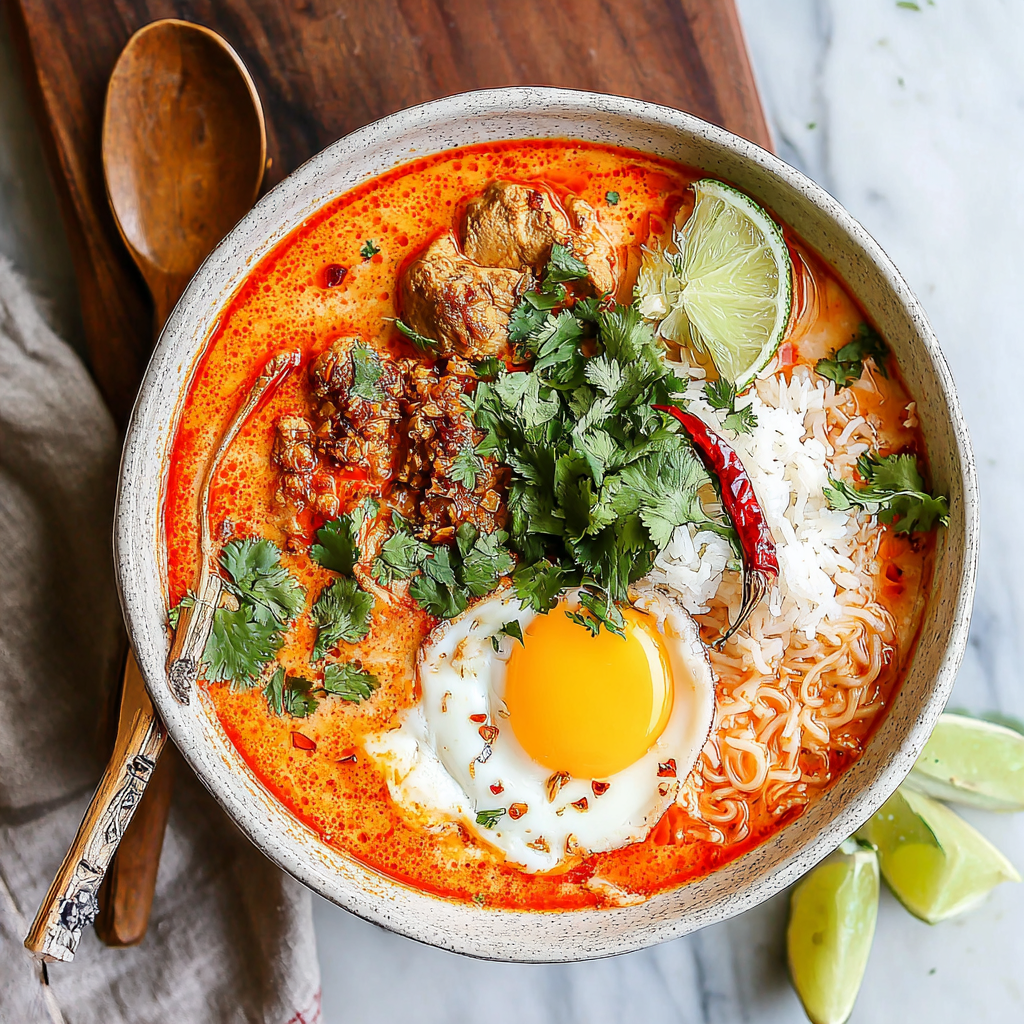
The aroma of Thai Coconut Curry simmering on the stove instantly transports me to the bustling streets of Bangkok, where I first discovered the perfect balance of creamy coconut milk, aromatic spices, and vibrant herbs. This authentic Thai coconut curry captures those complex flavors while being surprisingly achievable in any home kitchen. The beauty lies in how effortlessly rich coconut milk melds with fragrant curry paste and fresh ingredients to create a restaurant-quality dish that’s ready in just 30 minutes.
Ingredients List
For the Curry:
- 1 can (14 oz) full-fat coconut milk
- 2-3 tablespoons red curry paste
- 1 lb chicken thighs or breast, cut into bite-sized pieces
- 1 medium onion, sliced
- 1 bell pepper, sliced
- 1 cup green beans, trimmed
- 2 tablespoons fish sauce
- 1 tablespoon brown sugar
- 2 kaffir lime leaves (or zest of 1 lime)
- 1 cup fresh basil leaves
- 2 cloves garlic, minced
- 1 inch fresh ginger, grated
- 2 tablespoons vegetable oil
- Salt to taste
Substitutions: Swap chicken for tofu or shrimp, use soy sauce instead of fish sauce for vegetarian versions, or substitute Thai basil with regular basil plus a pinch of mint.
Timing
- Prep time: 10 minutes
- Cook time: 20 minutes
- Total time: 30 minutes
Time-saving tip: Prep all vegetables while the aromatics are cooking to streamline the process and keep flavors building continuously.
How to Make It
1. Build the Aromatic Base
Heat oil in a large skillet or wok over medium-high heat. The oil should shimmer but not smoke. Add minced garlic and grated ginger, stirring constantly for 30 seconds until fragrant and golden. This crucial step releases the essential oils that form your curry’s flavor foundation, so don’t rush it.
2. Bloom the Curry Paste
Add curry paste to the aromatic base and stir vigorously for 1-2 minutes. You’ll hear gentle sizzling and smell the spices intensifying – this blooming process awakens the paste’s dormant flavors. The paste should darken slightly and become very fragrant, indicating the oils are properly activated.
3. Create the Creamy Base
Pour in half the coconut milk, whisking constantly to incorporate the curry paste completely. The mixture should become smooth and brick-red in color. Let it simmer for 2-3 minutes until you see tiny oil droplets forming on the surface – this means the coconut milk is properly breaking and concentrating flavors.
4. Cook the Protein and Vegetables
Add chicken pieces and cook for 5-6 minutes until they’re nearly cooked through and lightly golden. The chicken should feel firm but still slightly springy. Add onions, bell peppers, and green beans, stirring to coat everything in the fragrant sauce. The vegetables should retain some crunch for authentic texture.
5. Finish with Balance
Pour in remaining coconut milk, fish sauce, brown sugar, and kaffir lime leaves. The curry should have a rich, creamy consistency that coats the back of a spoon. Simmer for 8-10 minutes until chicken is fully cooked and vegetables are tender-crisp. Taste and adjust seasoning – you want a harmonious balance of salty, sweet, and spicy flavors.
6. Fresh Finish
Remove from heat and stir in fresh basil leaves just before serving. The residual heat will wilt the basil perfectly while preserving its bright, peppery flavor. This final addition brings freshness that cuts through the rich coconut base beautifully.
Nutrition Notes
Per serving (serves 4): Approximately 380 calories, 28g protein, 12g carbohydrates, 26g fat. Rich in healthy fats from coconut milk and provides essential vitamins from colorful vegetables. Values are approximate and may vary based on specific ingredients used.
Serving Suggestions
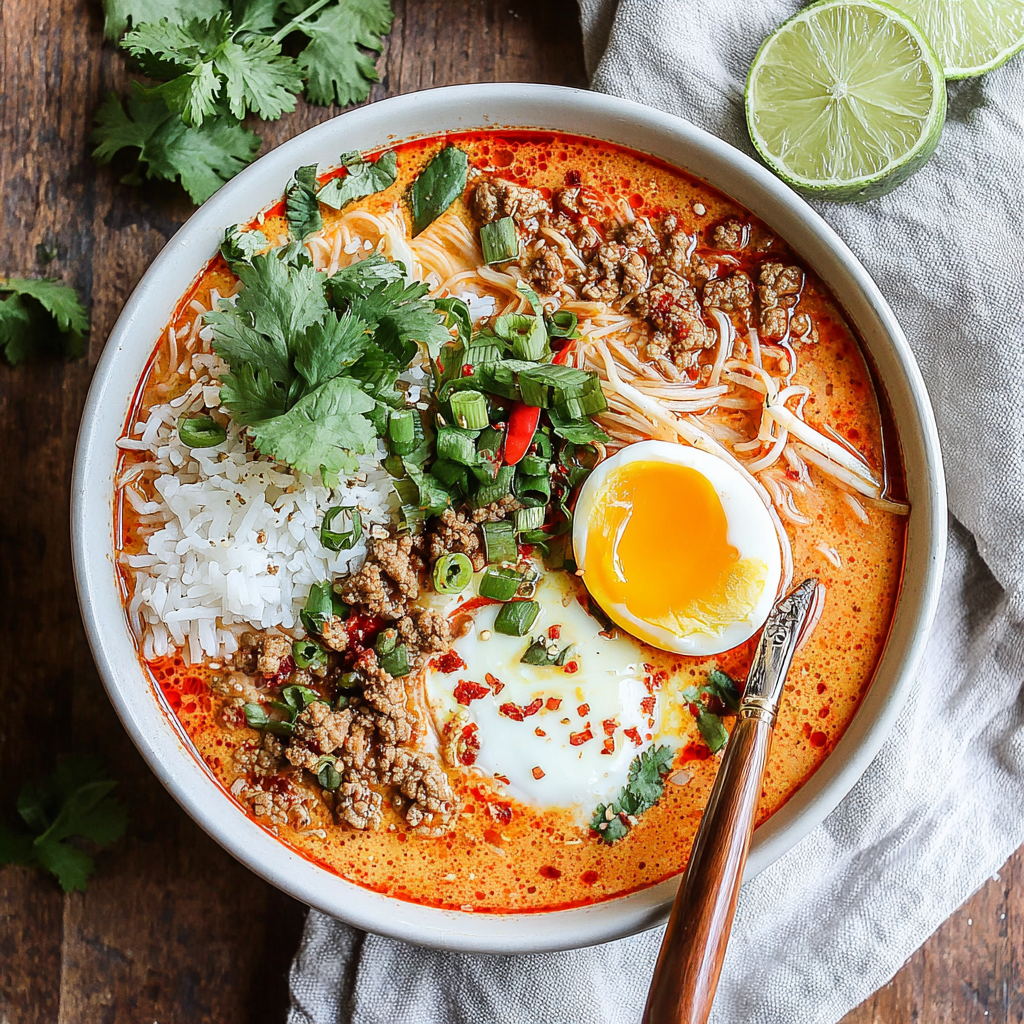
Serve this aromatic curry over steamed jasmine rice or rice noodles to soak up every drop of the creamy sauce. For a complete Thai experience, pair with cucumber salad or recipe sides like spring rolls. Plan for about 1 cup curry per person when served over rice.
Common Mistakes to Avoid
Skipping the paste blooming step: Raw curry paste tastes harsh and underdeveloped. Always cook it with aromatics first. Using low-fat coconut milk: Full-fat versions create the signature creamy texture and rich flavor. Overcooking vegetables: They should retain some bite for authentic texture and better nutrition. Adding basil too early: Fresh herbs become bitter when overcooked, so stir them in at the very end.
Storing Tips
Refrigerate leftover curry in airtight containers for up to 4 days. The flavors actually improve overnight as spices meld together. Freeze portions for up to 3 months. Reheat gently on the stovetop, adding a splash of coconut milk if needed to restore creaminess.
Conclusion
This Thai coconut curry delivers authentic flavors without intimidating techniques or hard-to-find ingredients. The combination of creamy coconut milk, aromatic spices, and fresh herbs creates a satisfying meal that rivals your favorite Thai restaurant. Give it a try and share how your homemade version turns out!
FAQs
Can I make this curry ahead of time?
Yes! The flavors actually improve when made a day ahead. Store in the refrigerator and reheat gently, adding fresh basil just before serving.
What if I can’t find kaffir lime leaves?
Regular lime zest works perfectly as a substitute. Use the zest of one lime, added at the same time as the lime leaves would be.
How can I adjust the spice level?
Start with 2 tablespoons of curry paste for mild heat, or use 4 tablespoons for authentic spice. You can also add sliced chilies for extra heat.
Can I use light coconut milk instead?
Full-fat coconut milk creates the authentic creamy texture, but light versions work if you prefer. The curry will be thinner but still flavorful.
Why is my curry too watery?
Simmer uncovered longer to reduce excess liquid, or add an extra tablespoon of curry paste to thicken and intensify flavors.
For more inspiration, check out additional recipe ideas on Pinterest.
Thai Coconut Curry
Ingredients
Method
- Heat oil in a large skillet or wok over medium-high heat. The oil should shimmer but not smoke. Add minced garlic and grated ginger, stirring constantly for 30 seconds until fragrant and golden.
- Add curry paste to the aromatic base and stir vigorously for 1-2 minutes. You’ll hear gentle sizzling and smell the spices intensifying. The paste should darken slightly and become very fragrant.
- Pour in half the coconut milk, whisking constantly to incorporate the curry paste completely. The mixture should become smooth and brick-red in color. Let it simmer for 2-3 minutes until you see tiny oil droplets forming on the surface.
- Add chicken pieces and cook for 5-6 minutes until they’re nearly cooked through and lightly golden. Add onions, bell peppers, and green beans, stirring to coat everything in the fragrant sauce.
- Pour in remaining coconut milk, fish sauce, brown sugar, and kaffir lime leaves. Simmer for 8-10 minutes until chicken is fully cooked and vegetables are tender-crisp. Taste and adjust seasoning.
- Remove from heat and stir in fresh basil leaves just before serving. The residual heat will wilt the basil perfectly while preserving its bright, peppery flavor.
Leave a Reply