
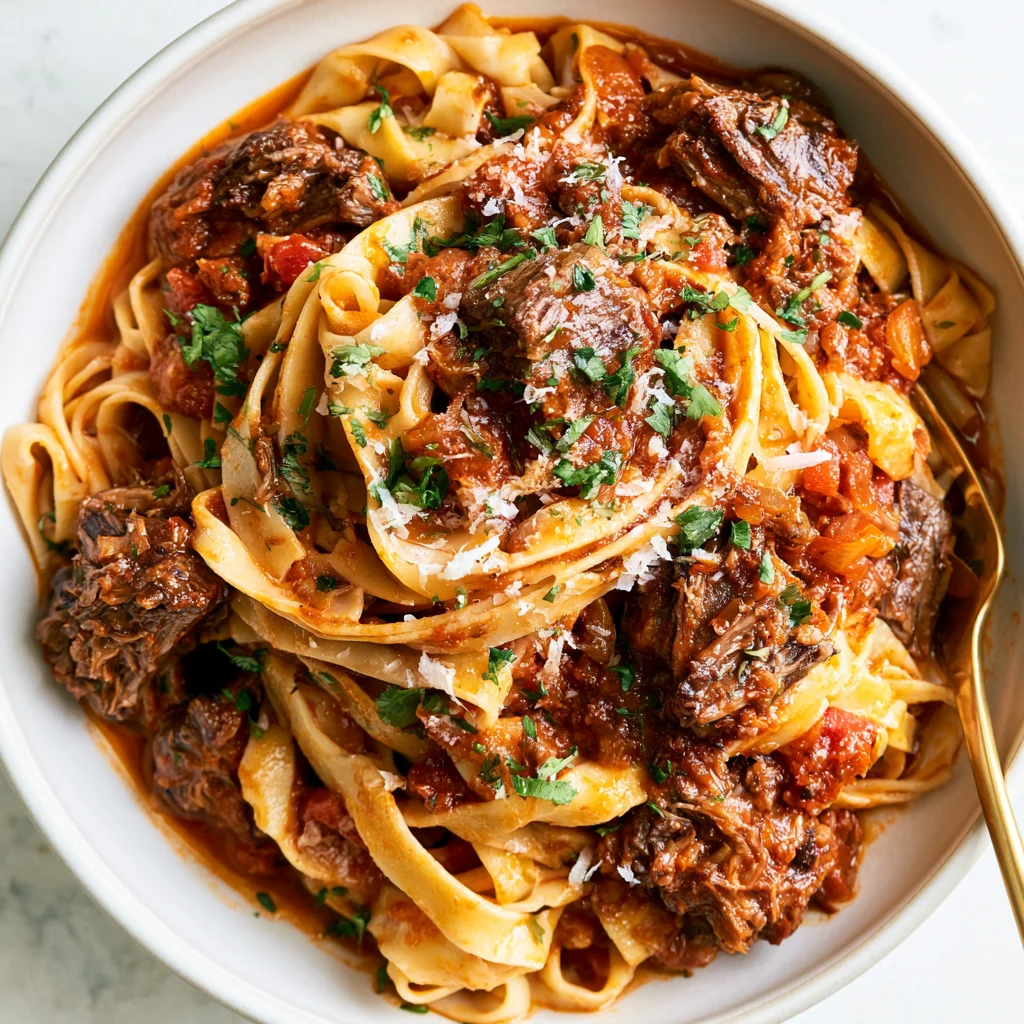
This beef short rib ragu is the kind of meal that makes the whole house smell incredible — deeply savory, rich with slow-cooked tomato and red wine, and so tender the meat practically melts into the sauce. It’s a recipe our family comes back to again and again, especially on cold evenings when everyone needs something truly comforting on the table.
Ingredients
- 2.5 lbs bone-in beef short ribs
- 2 tablespoons olive oil
- 1 medium yellow onion, finely diced
- 3 garlic cloves, minced
- 2 medium carrots, finely diced
- 2 celery stalks, finely diced
- 2 tablespoons tomato paste
- 1 cup dry red wine (such as Cabernet Sauvignon)
- 1 can (28 oz) crushed San Marzano tomatoes
- 1 cup beef broth
- 2 sprigs fresh rosemary
- 2 sprigs fresh thyme
- 1 bay leaf
- Salt and black pepper to taste
- Fresh parsley and Parmesan for serving
Substitution Tips: Swap red wine for extra beef broth if cooking for kids. Boneless short ribs work beautifully if bone-in isn’t available. For a budget-friendly option, beef chuck cut into large chunks makes an excellent stand-in.
Timing
- Prep Time: 20 minutes
- Cook Time: 3 hours 30 minutes
- Total Time: 3 hours 50 minutes
Meal-Prep Tip: This short rib ragu actually tastes better the next day once the flavors deepen overnight. Make it on Sunday and refrigerate — weeknight dinner is already handled.
How to Make Beef Short Rib Ragu
1. Season and Sear the Short Ribs
Pat your short ribs completely dry with paper towels — this step is non-negotiable for a proper sear. Season generously on all sides with salt and black pepper. Heat olive oil in a large Dutch oven over medium-high heat until it shimmers. Add the ribs in a single layer without crowding and sear for 3–4 minutes per side until a deep mahogany crust forms. You’ll hear a confident sizzle — that’s exactly what you want. That crust locks in flavor and builds the rich base of your sauce. Remove the ribs and set aside.
2. Build the Soffritto
Reduce the heat to medium and add the diced onion, carrots, and celery to the same pot. Scrape up those browned bits from the bottom — they’re pure flavor. Cook, stirring occasionally, for about 6–8 minutes until the vegetables soften and smell sweet and fragrant. Add the garlic and tomato paste, stirring everything together and cooking for another 2 minutes until the paste turns a shade darker. This soffritto is the aromatic backbone of your braised short rib ragu.
3. Deglaze and Add Liquids
Pour in the red wine and let it bubble vigorously for 2–3 minutes, scraping the bottom of the pot clean. The sharp alcohol smell will mellow and turn rich — that’s your cue to move on. Add the crushed tomatoes, beef broth, rosemary, thyme, and bay leaf. Stir to combine and taste for seasoning.
4. Slow Braise Until Fall-Off-The-Bone Tender
Nestle the seared short ribs back into the pot, bone-side up. The liquid should come roughly halfway up the ribs. Bring to a gentle simmer, then cover and reduce heat to low. Let the ragu braise for 3 to 3.5 hours. Check occasionally — it should bubble softly, never aggressively. The meat is ready when it pulls away from the bone with zero resistance and practically shreds itself.
5. Shred and Finish the Sauce
Remove the ribs and discard the bones, rosemary, thyme sprigs, and bay leaf. Use two forks to shred the beef, then stir it back into the sauce. Simmer uncovered for 10–15 minutes to thicken everything to a glossy, coating consistency. Taste once more and adjust salt as needed. This recipe is deeply satisfying served immediately or even better the following day.
Nutritional Information
Per serving (approximately 1 cup of ragu, without pasta): Calories: 480 | Protein: 38g | Fat: 28g | Carbohydrates: 12g | Fiber: 3g | Sodium: 520mg. Values are approximate and will vary based on specific ingredients used.
Serving Suggestions
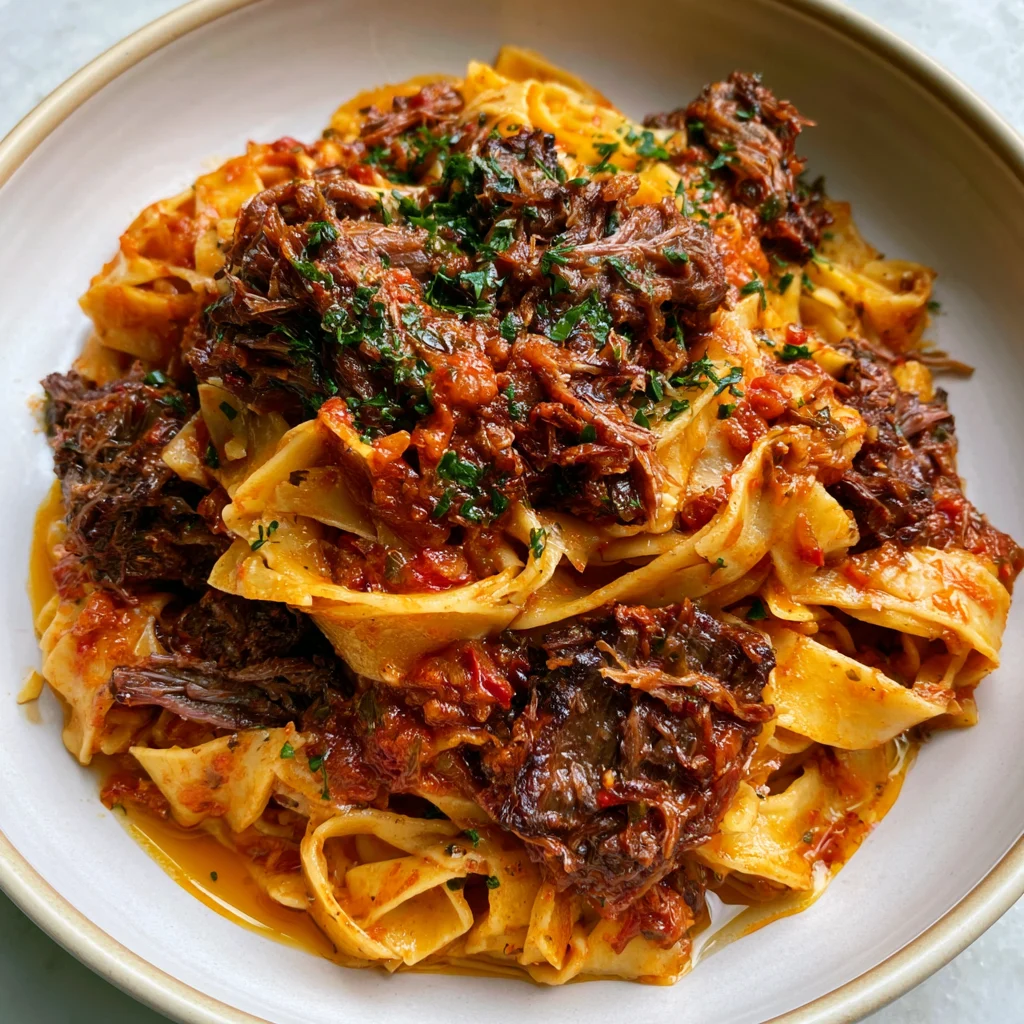
Spoon this rich braised short rib ragu generously over pappardelle or rigatoni for a classic Italian-style dinner. It’s equally wonderful served over creamy polenta or buttery mashed potatoes for a cozy, kid-approved plate. Finish with shaved Parmesan and a sprinkle of fresh parsley.
Common Mistakes to Avoid
- Skipping the sear: Browning the meat creates deep, complex flavor. Don’t rush or skip it.
- Cooking at too high a heat: A hard boil makes the meat tough and dry. Low and slow is the only way to achieve that fall-off-the-bone result.
- Not patting the meat dry: Wet meat steams instead of searing. Always dry thoroughly first.
- Under-seasoning the sauce: Taste before serving and adjust. A generous pinch of salt at the end makes everything pop.
Storing Tips
Store leftover beef short rib ragu in an airtight container in the refrigerator for up to 4 days. It freezes beautifully for up to 3 months — portion it into freezer bags for easy weeknight meals. Reheat gently on the stovetop over low heat, adding a splash of broth to loosen the sauce.
Conclusion
This beef short rib ragu brings slow-cooked comfort straight to your family’s table with minimal hands-on effort and maximum reward. Make it once and it will earn a permanent spot in your dinner rotation. Save or share this recipe so you always have it when you need it most.
FAQs
Can I make this in a slow cooker?
Absolutely. Complete the searing and soffritto steps on the stovetop, then transfer everything to your slow cooker. Cook on low for 7–8 hours or high for 4–5 hours until the meat is completely tender.
My sauce is too thin — how do I fix it?
Simply remove the lid and simmer uncovered for an additional 15–20 minutes. The liquid will reduce and thicken naturally into a rich, glossy ragu.
My kids don’t like chunky sauces — any tips?
Finely dice the vegetables very small so they melt into the sauce during braising. By the time it’s done, the soffritto practically disappears, leaving behind pure flavor without any visible texture.
Can I make this ahead for a dinner party?
This is one of the best make-ahead meals you can serve. Prepare it fully one or two days in advance and refrigerate. Reheat gently on the stovetop — the flavors will only improve with time.
What can I use instead of red wine?
Replace the wine with an equal amount of beef broth plus one tablespoon of balsamic vinegar. It adds a similar depth and slight acidity without any alcohol.
Beef Short Rib Ragu
Ingredients
Method
- Pat your short ribs completely dry with paper towels — this step is non-negotiable for a proper sear.
- Season generously on all sides with salt and black pepper.
- Heat olive oil in a large Dutch oven over medium-high heat until it shimmers.
- Add the ribs in a single layer without crowding and sear for 3–4 minutes per side until a deep mahogany crust forms. That crust locks in flavor and builds the rich base of your sauce.
- Remove the ribs and set aside.
- Reduce the heat to medium and add the diced onion, carrots, and celery to the same pot. Scrape up those browned bits from the bottom.
- Cook, stirring occasionally, for about 6–8 minutes until the vegetables soften and smell sweet and fragrant.
- Add the garlic and tomato paste, stirring everything together and cooking for another 2 minutes until the paste turns a shade darker.
- Pour in the red wine and let it bubble vigorously for 2–3 minutes, scraping the bottom of the pot clean.
- Add the crushed tomatoes, beef broth, rosemary, thyme, and bay leaf. Stir to combine and taste for seasoning.
- Nestle the seared short ribs back into the pot, bone-side up. The liquid should come roughly halfway up the ribs.
- Bring to a gentle simmer, then cover and reduce heat to low.
- Let the ragu braise for 3 to 3.5 hours, checking occasionally. It should bubble softly, never aggressively. The meat is ready when it pulls away from the bone with zero resistance and practically shreds itself.
- Remove the ribs and discard the bones, rosemary sprigs, thyme sprigs, and bay leaf.
- Use two forks to shred the beef, then stir it back into the sauce.
- Simmer uncovered for 10–15 minutes to thicken everything to a glossy, coating consistency.
- Taste once more and adjust salt as needed. Serve over pappardelle, rigatoni, creamy polenta, or mashed potatoes. Finish with shaved Parmesan and a sprinkle of fresh parsley.
Leave a Reply