
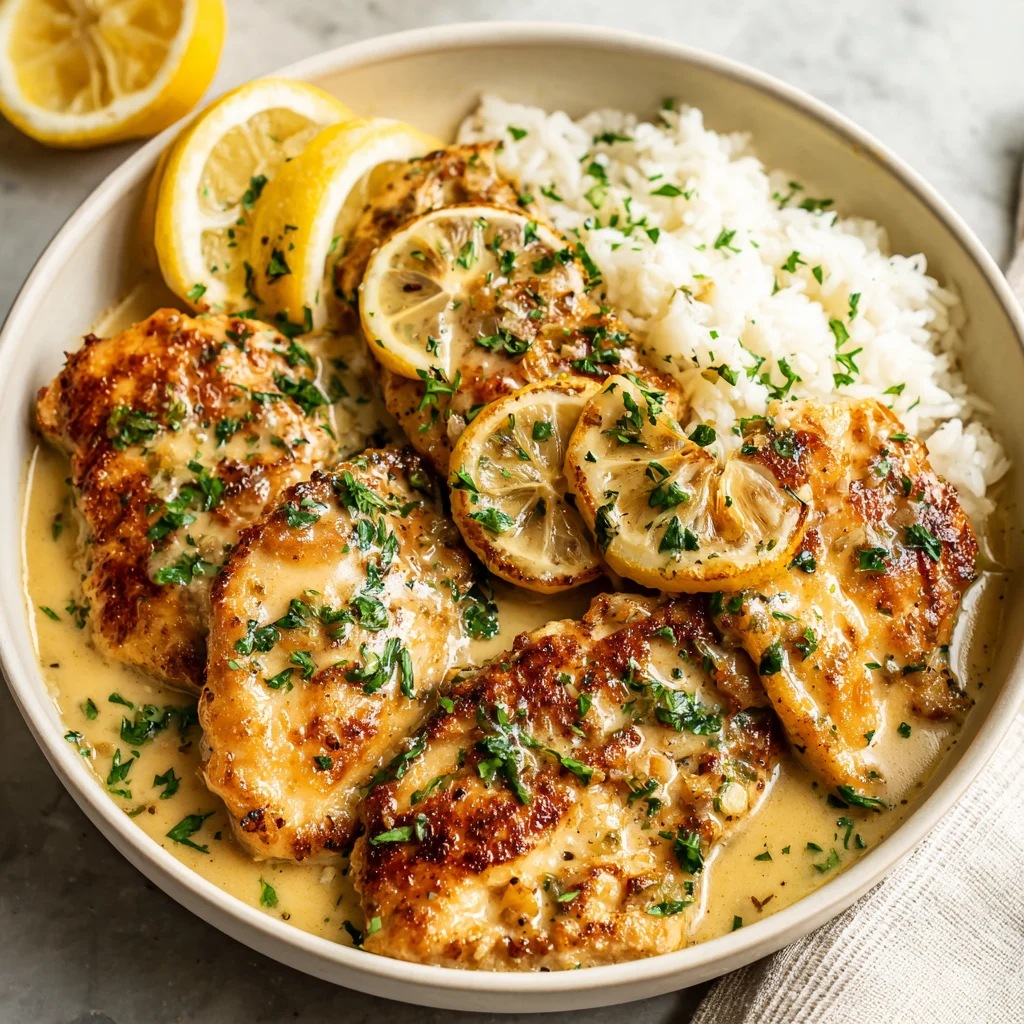
There’s something magical about the moment Chicken Francese hits your dinner table – golden, tender cutlets swimming in a buttery lemon-wine sauce that makes everyone pause mid-conversation. This Italian-American classic transforms ordinary chicken breasts into restaurant-quality comfort food that feels like a warm hug after a long day.
Ingredients
For the chicken:
- 4 boneless, skinless chicken breasts (about 2 pounds), pounded thin
- 1 cup all-purpose flour
- 4 large eggs, beaten
- 1 teaspoon salt
- ½ teaspoon black pepper
- ¼ cup olive oil
- 2 tablespoons butter
For the sauce:
- ½ cup dry white wine (or chicken broth)
- ¼ cup fresh lemon juice
- 4 tablespoons butter
- 2 tablespoons fresh parsley, chopped
- 1 lemon, sliced for garnish
Budget-friendly substitutions: Use chicken thighs instead of breasts for extra flavor and savings. Swap white wine for additional chicken broth with a splash of white wine vinegar. Fresh parsley can be replaced with dried (use 1 tablespoon).
Timing
- Prep time: 15 minutes
- Cook time: 20 minutes
- Total time: 35 minutes
Time-saving tip: Pound chicken breasts the night before and store them covered in the refrigerator. Set up your dredging station while the pan preheats to streamline the cooking process.
How to Make It
1. Prepare the Chicken
Place chicken breasts between plastic wrap and pound to ¼-inch thickness. Even thickness ensures uniform cooking and prevents dry spots. Season both sides with salt and pepper, letting the flavors penetrate the meat for at least 5 minutes.
2. Set Up Your Dredging Station
Place flour in one shallow dish and beaten eggs in another. This assembly-line approach keeps your hands cleaner and makes the coating process faster. The flour creates the first layer that helps the egg adhere perfectly.
3. Coat the Chicken
Dredge each piece first in flour, shaking off excess, then dip completely in beaten eggs. The double coating creates that signature golden crust that makes Chicken Francese irresistible. Let any excess egg drip off before cooking.
4. Cook the Cutlets
Heat olive oil and butter in a large skillet over medium-high heat. When the butter stops foaming, add chicken pieces without overcrowding. Cook 3-4 minutes per side until golden brown and cooked through. You’ll hear a gentle sizzle – not aggressive spattering. Transfer to a plate and cover loosely.
5. Create the Sauce
In the same pan, add white wine and lemon juice, scraping up any browned bits. These flavor deposits are pure gold for your sauce. Let it simmer for 2 minutes, then whisk in cold butter one piece at a time. The sauce should coat the back of a spoon beautifully.
6. Finish and Serve
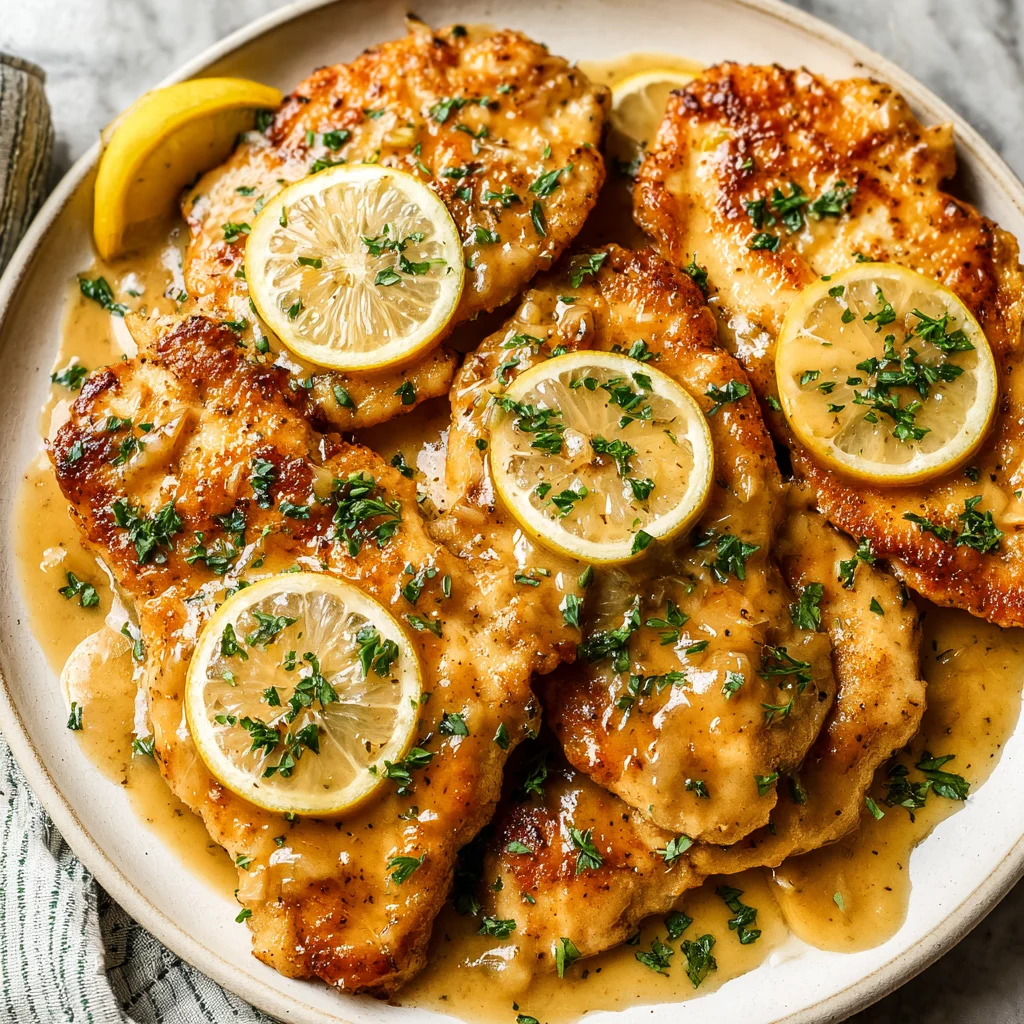
Return chicken to the pan, spooning sauce over each piece. Sprinkle with fresh parsley and arrange lemon slices on top. The chicken will absorb some sauce while staying crispy on the edges.
Nutritional Information
Per serving (serves 4): Approximately 385 calories, 35g protein, 12g carbohydrates, 18g fat. Rich in lean protein and vitamin C from fresh lemon juice, making this recipe both satisfying and nutritious for growing families.
Serving Suggestions
Pair this elegant dish with creamy mashed potatoes or buttered egg noodles to soak up every drop of that lemony sauce. Steamed asparagus or roasted broccoli adds color and balances the richness perfectly. A simple arugula salad provides a peppery contrast.
Common Mistakes to Avoid
Don’t skip pounding the chicken – thick pieces cook unevenly and can become tough. Avoid high heat, which burns the coating before the chicken cooks through. Never add butter to a screaming hot pan; it will brown too quickly. Finally, don’t skip the wine deglazing step – those caramelized bits create incredible depth in your sauce.
Storing Tips
Refrigerate leftovers for up to 3 days in an airtight container. Reheat gently in a covered skillet over low heat with a splash of chicken broth to restore moisture. Avoid the microwave, which can make the coating soggy and the chicken rubbery.
Conclusion
This Chicken Francese recipe brings restaurant elegance to your family table without the complexity. The tender, golden results and bright, buttery sauce create memories that last long after the last bite disappears.
FAQs
Can I make this ahead of time?
Yes, prepare the chicken through step 4 and refrigerate. Make the sauce fresh when ready to serve for the best flavor and texture.
What if my kids don’t like the wine sauce?
Substitute all wine with chicken broth and add an extra squeeze of lemon juice. The flavor remains bright and appealing to younger palates.
Why is my coating falling off?
Ensure chicken is completely dry before dredging, and don’t move the pieces too early. Let them develop a proper crust before flipping.
Can I use chicken thighs instead?
Absolutely! Boneless thighs stay more tender and forgiving. Adjust cooking time to 4-5 minutes per side since they’re typically thicker.
How do I know when the chicken is done?
Internal temperature should reach 165°F, or juices run clear when pierced. The coating should be golden brown and crispy. Find more family favorites on our recipe boards for weeknight inspiration.
Chicken Francese
Ingredients
Method
- Place chicken breasts between plastic wrap and pound to ¼-inch thickness. Season both sides with salt and pepper, letting the flavors penetrate the meat for at least 5 minutes.
- Place flour in one shallow dish and beaten eggs in another to set up your dredging station.
- Dredge each piece first in flour, shaking off excess, then dip completely in beaten eggs. Let any excess egg drip off before cooking.
- Heat olive oil and butter in a large skillet over medium-high heat. When the butter stops foaming, add chicken pieces without overcrowding. Cook 3-4 minutes per side until golden brown and cooked through. Transfer to a plate and cover loosely.
- In the same pan, add white wine and lemon juice, scraping up any browned bits. Let it simmer for 2 minutes, then whisk in cold butter one piece at a time until sauce coats the back of a spoon.
- Return chicken to the pan, spooning sauce over each piece. Sprinkle with fresh parsley and arrange lemon slices on top.
Leave a Reply