
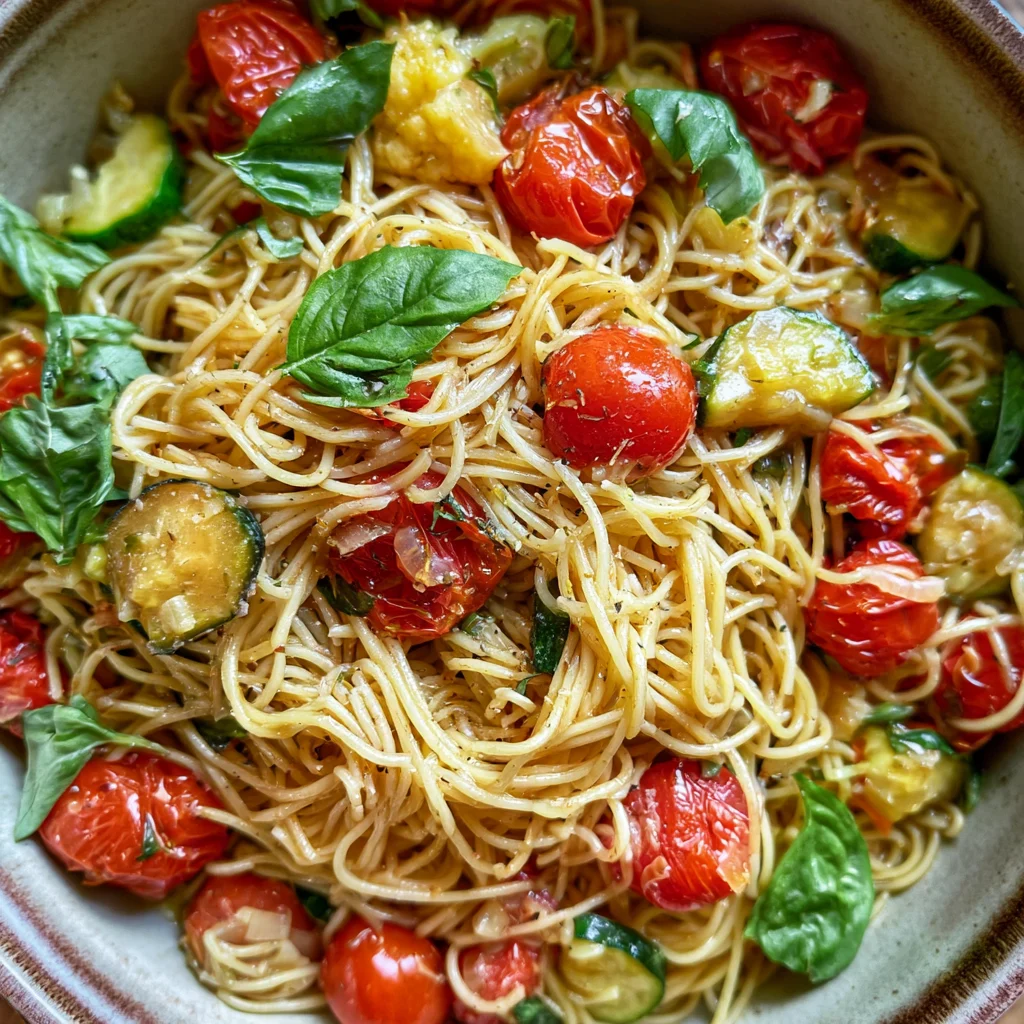
There’s something magical about a pasta dish that captures the essence of summer in every bite. Ina Garten’s Summer Garden Pasta brings together the season’s freshest vegetables with perfectly cooked pasta in a light, vibrant sauce that makes weeknight dinners feel like a celebration. This recipe has become a go-to in my kitchen because it’s both elegant enough for guests and simple enough for busy Tuesday nights.
What makes this dish truly special is how it transforms humble garden vegetables into something extraordinary. The cherry tomatoes burst and release their sweet juices, the zucchini becomes tender and golden, and fresh basil ties everything together with its aromatic brightness. It’s the kind of meal that makes your family actually excited about eating their vegetables.
Ingredients
- 1 pound fusilli or penne pasta
- 1/4 cup good olive oil
- 4 garlic cloves, minced
- 2 pints cherry tomatoes, halved
- 2 medium zucchini, cut into 1/2-inch pieces
- 1 yellow squash, cut into 1/2-inch pieces
- 1 teaspoon kosher salt
- 1/2 teaspoon black pepper
- 1/2 cup fresh basil leaves, torn
- 1/2 cup freshly grated Parmesan cheese
- Zest of 1 lemon
- 2 tablespoons fresh lemon juice
Budget-Friendly Substitutions: Yellow squash can be replaced with additional zucchini if that’s what you have on hand. Regular pasta works just as well as fancy imported brands. If Parmesan is pricey, a good quality Pecorino Romano delivers similar flavor at a lower cost.
Timing
Prep Time: 15 minutes
Cook Time: 20 minutes
Total Time: 35 minutes
Time-Saving Tip: Chop all your vegetables while the pasta water comes to a boil. This dish comes together quickly once you start cooking, so having everything prepped and ready means dinner can be on the table in just over half an hour.
How to Make It
1. Cook the Pasta
Bring a large pot of salted water to a rolling boil. Add the pasta and cook according to package directions until al dente, usually about 10-12 minutes. The pasta should have a slight bite to it since it will continue cooking slightly when tossed with the vegetables. Before draining, reserve 1 cup of the starchy pasta water—this liquid gold will help create a silky sauce later. The starch acts as a natural thickener and helps the sauce cling to every piece of pasta.
2. Sauté the Garlic
While the pasta cooks, heat the olive oil in your largest skillet over medium heat. Add the minced garlic and let it sizzle for about 30 seconds, just until fragrant. You’ll smell that wonderful aroma that signals the garlic is ready, but watch carefully—burned garlic tastes bitter and will ruin the dish. If you see it browning too quickly, pull the pan off the heat for a moment.
3. Cook the Vegetables
Add the zucchini and yellow squash to the skillet, stirring to coat them in the garlic oil. Cook for about 5 minutes, stirring occasionally, until they develop golden edges and start to soften. The vegetables should still have some texture—nobody wants mushy squash. Now add the cherry tomatoes, salt, and pepper. Cook for another 5-7 minutes, gently pressing some of the tomatoes with your spoon to encourage them to burst and release their juices. This creates a light, fresh sauce that coats the pasta beautifully.
4. Combine Everything
Add the drained pasta directly to the skillet with the vegetables. Toss everything together, adding splashes of the reserved pasta water as needed to create a glossy sauce that coats the pasta. Start with 1/4 cup and add more if it looks dry. Remove from heat and stir in the torn basil, Parmesan, lemon zest, and lemon juice. The heat from the pasta will wilt the basil slightly and melt the cheese into creamy pockets throughout the dish. Taste and adjust seasoning—you might want a bit more salt or an extra squeeze of lemon.
Nutritional Information
Per serving (serves 6): Approximately 380 calories, 12g fat, 56g carbohydrates, 4g fiber, 13g protein, 280mg sodium. This pasta delivers a good balance of vegetables and whole grains, making it a satisfying yet lighter dinner option that won’t leave your family feeling overly full.
Serving Suggestions
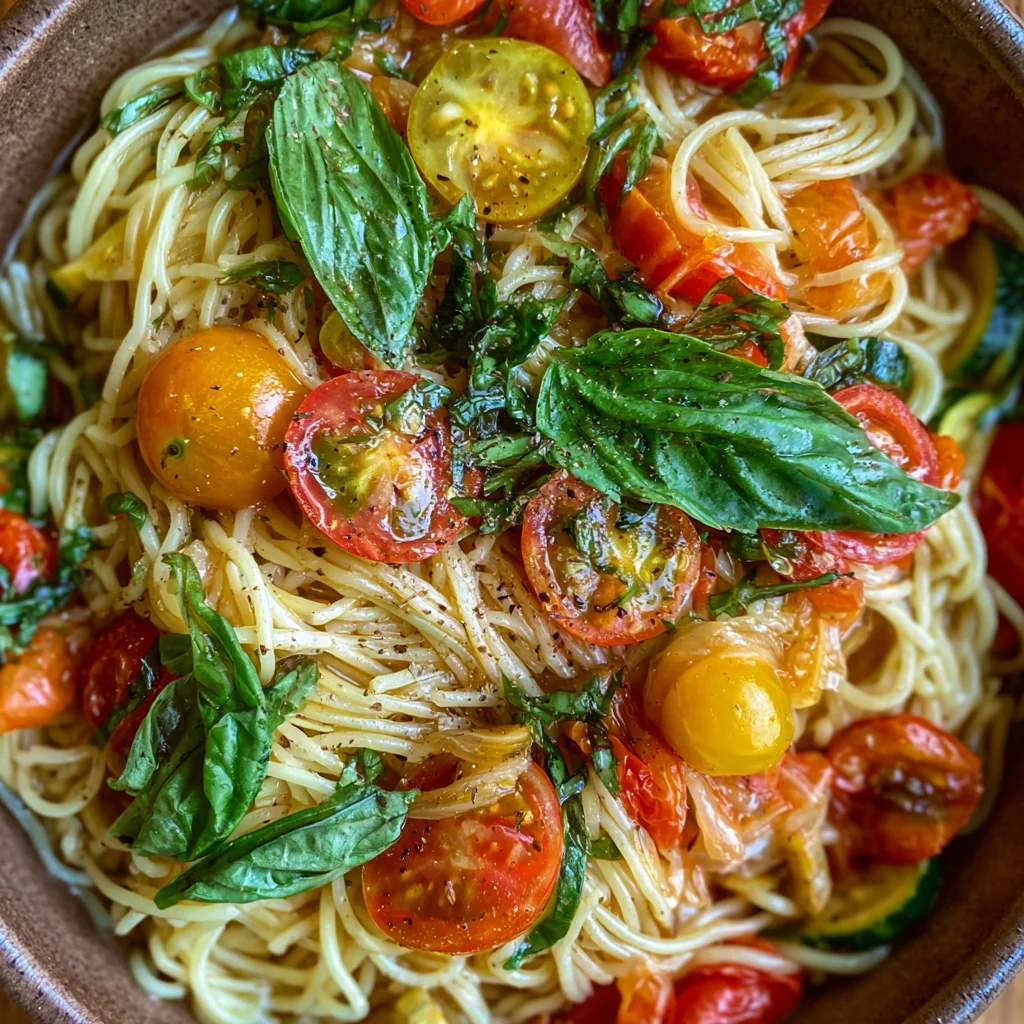
This Summer Garden Pasta pairs beautifully with a simple arugula salad dressed with balsamic vinaigrette and a crusty baguette for soaking up any extra sauce. For a heartier meal, serve alongside grilled chicken or shrimp. A chilled glass of white wine for the adults and sparkling lemonade for the kids complete the summer dining experience.
Common Mistakes to Avoid
Overcooking the vegetables: Keep them slightly firm for the best texture. Mushy squash loses its appeal quickly.
Skipping the pasta water: This starchy liquid is essential for creating a cohesive sauce. Plain water won’t give you the same silky result.
Adding cheese while the pan is too hot: Remove from heat first or the Parmesan will clump instead of melting smoothly.
Using dried basil: Fresh basil is truly essential here. The bright, peppery flavor can’t be replicated with dried herbs.
Storing Tips
Store leftovers in an airtight container in the refrigerator for up to 3 days. The pasta absorbs liquid as it sits, so add a splash of water or olive oil when reheating. Warm gently in a skillet over medium heat rather than the microwave for the best texture. This dish doesn’t freeze well due to the fresh vegetables and delicate sauce.
Conclusion
Ina Garten’s Summer Garden Pasta transforms simple, seasonal ingredients into a dish your whole family will request again and again. It’s proof that the best meals don’t need to be complicated. Give this recipe a try tonight and bring the flavors of summer to your dinner table.
FAQs
Can I make this ahead of time?
This pasta is best served fresh, but you can prep the vegetables a few hours ahead and store them covered in the refrigerator. Cook the pasta and combine everything just before serving for optimal flavor and texture.
What if my kids don’t like zucchini?
Try cutting the zucchini into smaller pieces so it blends in better, or substitute with vegetables they prefer like bell peppers or green beans. The key is maintaining that fresh summer vegetable element.
Can I add protein to this dish?
Absolutely. Grilled chicken, sautéed shrimp, or white beans make excellent additions. Add cooked protein when you toss the pasta with the vegetables so everything warms through together.
Why is my sauce watery?
You may have added too much pasta water. Start with less and add gradually. Also, let the tomatoes cook long enough to release their juices and concentrate slightly before adding the pasta.
Can I use a different pasta shape?
Yes, short pasta shapes like rigatoni, rotini, or farfalle all work wonderfully. They catch the vegetables and sauce in their crevices, making every bite flavorful.
Ina Garten’s Summer Garden Pasta
Ingredients
Method
- Bring a large pot of salted water to a rolling boil. Add the pasta and cook according to package directions until al dente, usually about 10-12 minutes. The pasta should have a slight bite to it since it will continue cooking slightly when tossed with the vegetables.
- Before draining, reserve 1 cup of the starchy pasta water. Drain the pasta and set aside.
- While the pasta cooks, heat the olive oil in your largest skillet over medium heat. Add the minced garlic and let it sizzle for about 30 seconds, just until fragrant. Watch carefully to avoid burning — if the garlic browns too quickly, pull the pan off the heat for a moment.
- Add the zucchini and yellow squash to the skillet, stirring to coat them in the garlic oil. Cook for about 5 minutes, stirring occasionally, until they develop golden edges and start to soften. The vegetables should still have some texture.
- Add the cherry tomatoes, salt, and pepper. Cook for another 5-7 minutes, gently pressing some of the tomatoes with your spoon to encourage them to burst and release their juices, creating a light, fresh sauce.
- Add the drained pasta directly to the skillet with the vegetables. Toss everything together, adding splashes of the reserved pasta water as needed to create a glossy sauce that coats the pasta. Start with 1/4 cup and add more if it looks dry.
- Remove from heat and stir in the torn basil, Parmesan, lemon zest, and lemon juice. The heat from the pasta will wilt the basil slightly and melt the cheese into creamy pockets throughout the dish. Taste and adjust seasoning with more salt or an extra squeeze of lemon as desired.
Leave a Reply