
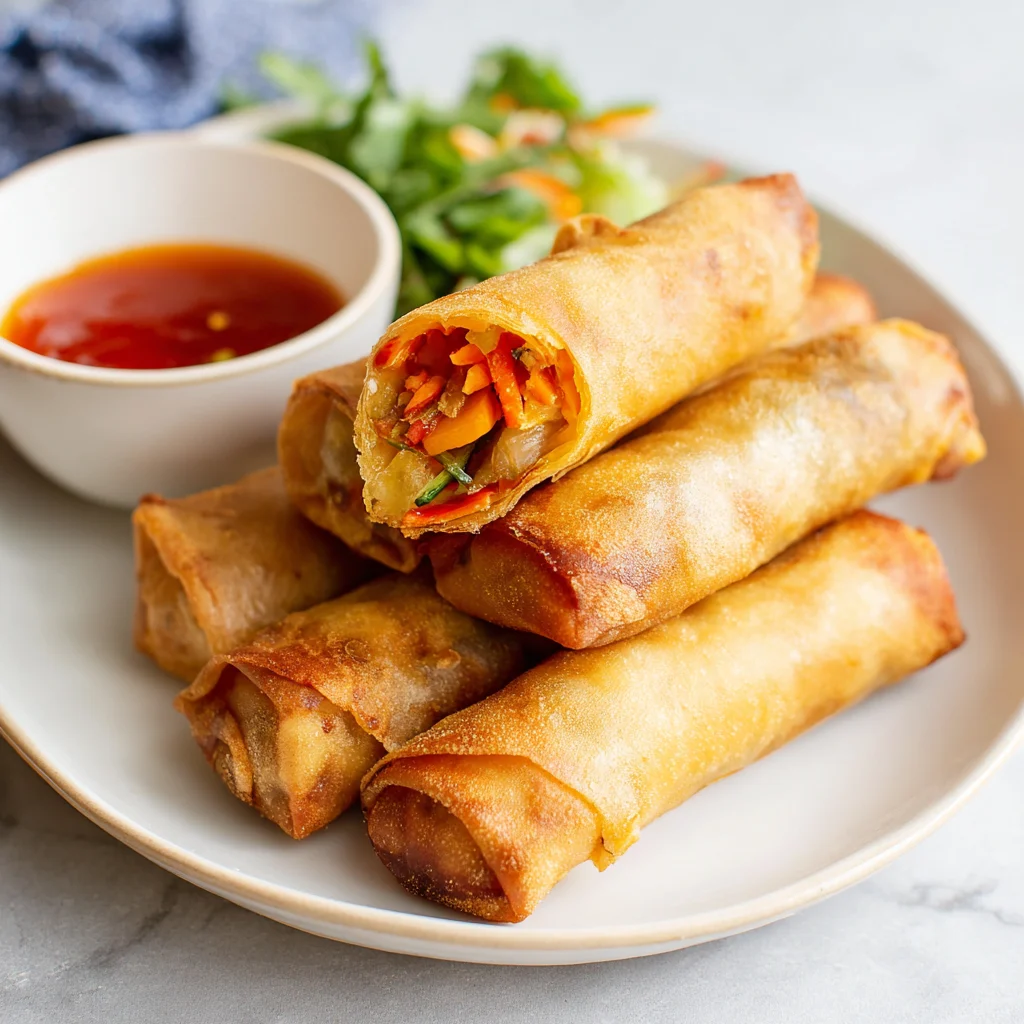
Fresh, crunchy, and bursting with colorful vegetables, these Vegetable Spring Rolls bring restaurant-quality flavors to your family table with surprisingly simple ingredients. These light yet satisfying rolls make the perfect healthy snack, appetizer, or even a complete meal that both kids and adults absolutely love.
Ingredients
- 12 rice paper rounds
- 2 cups mixed greens or lettuce leaves, chopped
- 1 large carrot, julienned
- 1 cucumber, julienned
- 1 red bell pepper, thinly sliced
- 1 cup purple cabbage, thinly sliced
- 1/2 cup fresh mint leaves
- 1/2 cup fresh cilantro leaves
- 1 avocado, sliced
- 2 tablespoons sesame seeds
For the Peanut Dipping Sauce:
- 1/4 cup natural peanut butter
- 2 tablespoons soy sauce
- 1 tablespoon rice vinegar
- 1 teaspoon honey
- 1 garlic clove, minced
- 1-2 teaspoons water to thin
Easy Substitutions: Replace peanut butter with almond butter for nut-sensitive families. Swap fresh herbs with whatever you have on hand – basil works beautifully. Use any crunchy vegetables your family enjoys.
Timing
Prep Time: 20 minutes
Cook Time: 0 minutes
Total Time: 20 minutes
Perfect for meal prep Sunday – prepare all vegetables ahead and store them in separate containers for quick assembly throughout the week.
How to Make It
1. Prepare the Vegetables
Wash and chop all your vegetables into thin, uniform strips. This step matters because evenly sized pieces roll more easily and create that satisfying crunch in every bite. Pat everything completely dry with paper towels – excess moisture makes the rice paper sticky and difficult to work with.
2. Make the Dipping Sauce
Whisk together peanut butter, soy sauce, rice vinegar, honey, and minced garlic in a small bowl. Add water gradually until you reach a smooth, dippable consistency. The sauce should coat the back of a spoon but still flow easily. Taste and adjust sweetness or saltiness as needed.
3. Soften the Rice Paper
Fill a large, shallow dish with warm water. Dip one rice paper round into the water for 10-15 seconds until it feels pliable but not completely soft – it will continue softening as you work. Place it on a clean, damp kitchen towel.
4. Assemble the Spring Rolls
Place a small handful of mixed greens on the lower third of the rice paper, leaving about 2 inches of border on each side. Layer your vegetables in colorful strips – carrots, cucumber, bell pepper, and cabbage. Add a few mint and cilantro leaves, then 2-3 avocado slices. Sprinkle with sesame seeds. Less is more here – overfilling makes rolling nearly impossible.
5. Roll Tightly
Fold the bottom edge over the filling, then fold in the sides. Roll tightly away from you, keeping gentle pressure to create a neat, compact cylinder. The rice paper should stick to itself naturally. Place seam-side down on a plate and cover with a damp towel to prevent drying.
Nutritional Information
Each spring roll contains approximately 85 calories, 3g protein, 12g carbohydrates, 3g fiber, and 3g healthy fats. These nutrient-packed rolls provide vitamins A, C, and K, plus folate and potassium.
Serving Suggestions
Serve these fresh vegetable spring rolls alongside coconut rice or a light Asian-inspired soup. They pair beautifully with edamame or a simple cucumber salad. For heartier appetites, add some grilled tofu or shrimp to the filling.

Common Mistakes to Avoid
Don’t oversoak the rice paper – it becomes too fragile and tears easily. Avoid overfilling your rolls, which makes them impossible to close properly. Keep finished rolls covered with a damp towel to prevent the wrapper from becoming tough and chewy. Finally, don’t skip patting vegetables dry – wet ingredients create soggy, unappetizing rolls.
Storing Tips
Store assembled spring rolls in the refrigerator for up to 2 days, wrapped individually in plastic wrap to prevent sticking. These don’t freeze well due to the fresh vegetables and rice paper texture.
Conclusion
These vibrant vegetable spring rolls prove that healthy eating can be both delicious and fun for the whole family. Roll up your sleeves and create this fresh recipe together tonight.
FAQs
Can I make these ahead of time?
Yes, assemble spring rolls up to 4 hours before serving. Keep them covered with damp paper towels and plastic wrap in the refrigerator.
What if my kids don’t like certain vegetables?
Start with familiar favorites like carrots and cucumbers, then gradually introduce new vegetables. Let kids choose their own fillings for a customized approach.
Why do my rice papers keep tearing?
You’re likely soaking them too long or handling them too roughly. Brief dips in warm water work best, and remember they continue softening after removal.
Can I add protein to these rolls?
Absolutely! Cooked shrimp, grilled chicken strips, or marinated tofu work wonderfully. Just ensure proteins are completely cooled before rolling.
What other dipping sauces work well?
Try sweet chili sauce, hoisin sauce mixed with lime juice, or a simple soy-ginger dipping sauce. Find more variations in our recipe collection for endless inspiration.
Vegetable Spring Rolls
Ingredients
Method
- Wash and chop all vegetables into thin, uniform strips. Pat everything completely dry with paper towels – excess moisture makes the rice paper sticky and difficult to work with.
- Whisk together peanut butter, soy sauce, rice vinegar, honey, and minced garlic in a small bowl. Add water gradually until you reach a smooth, dippable consistency. The sauce should coat the back of a spoon but still flow easily.
- Fill a large, shallow dish with warm water. Dip one rice paper round into the water for 10-15 seconds until it feels pliable but not completely soft. Place it on a clean, damp kitchen towel.
- Place a small handful of mixed greens on the lower third of the rice paper, leaving about 2 inches of border on each side. Layer vegetables in colorful strips – carrots, cucumber, bell pepper, and cabbage. Add a few mint and cilantro leaves, then 2-3 avocado slices. Sprinkle with sesame seeds.
- Fold the bottom edge over the filling, then fold in the sides. Roll tightly away from you, keeping gentle pressure to create a neat, compact cylinder. Place seam-side down on a plate and cover with a damp towel to prevent drying.
Leave a Reply